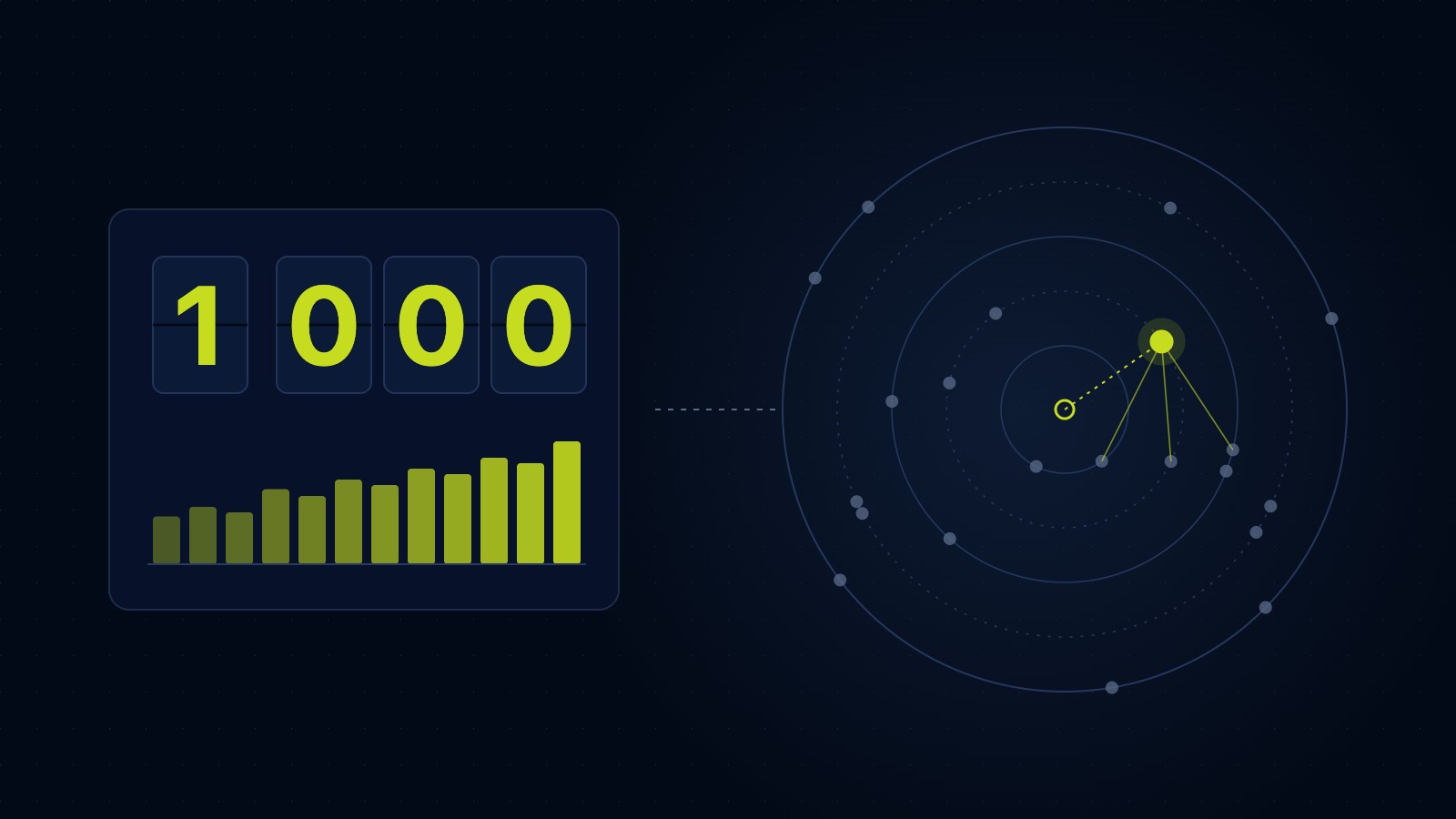
On Friday 6 November, a banner for businesses was spotted in ChatGPT. The promise is simple: confirm that the business is yours and you will see how many times it appeared in answers and how many people clicked through to your website. In my piece on the attention your analytics cannot see I wrote that only the platform displaying the answer has signals like these. The platform is starting to share them, and that is good news. The question is what you will read from this counter, and what you will never read from it.
What exactly was spotted, and why is it good news?
The feature is called Business Hub. It is not available yet, and OpenAI has not officially announced it. The banner and the first reports suggest that a verified business (connecting an online shop is the example given) will see two daily figures on a chart: impressions in answers and clicks on links to its website. On top of that come up-to-date product and company details, plus an agent that answers customers in a context the business controls. The panel will not show the questions people asked, competitors or any ranking.
This is good news, because a channel that has left no trace so far is getting a counter. Search went down this road earlier: Google Search Console has shown impressions and clicks for years, and marketers have learned to make decisions on that basis. The worst situation in the AI channel is therefore disappearing, the one where the customer's decision is made and the dashboard stays empty.
The counter confirms that the chance of attention in a model's answer exists and can be counted, but it does not say where that chance came from.
The counter measures the last step on the road to attention
In that earlier piece I broke the road to attention in the AI channel into four steps. The first is a fixed set of customer questions without the brand name. The second is the five rungs read from the content of answers, which together make up the chance of attention: presence, competition, position, direction and hand-off. The third is research involving people, which confirms that attention really happened, and the fourth is business impact: traffic from answers, enquiries and sales. Impressions and clicks from the platform's panel belong to that fourth step.
Why is that not enough? The panel will tell you that the brand appeared in answers a thousand times. It will not tell you in which questions, next to whom or in what position. Nor will it tell you whether the model recommended the brand or merely mentioned it, whether it described it accurately, or where it sent the customer. The five questions about the chance of attention remain unanswered.
Imagine two brands with an identical counter. The first comes up in questions about the category, and the model clearly recommends it. The second comes up in questions about the leader's weaknesses, as a cheaper alternative at the end of the list. The chart shows the same bar, yet these are two entirely different situations. Michał Grzebyk described the difference between a mention and a recommendation in a separate article.
The platform shows that the brand was in the answer. Independent measurement shows why, and next to whom.
Why will panel figures and measurement figures never match?
The panel counts every conversation of everyone who uses the platform, together with their history, memory and personalisation. Independent measurement puts a fixed set of customer questions to the models, without the brand name and without personalisation, with the model version and date next to every figure. The first is a counter, the second is a research sample, and both describe the same phenomenon from two different sides.
Neither measure cancels out the other, because each answers a different question. The counter tells you what happened in real people's conversations. The sample tells you what the model tends to do when a customer asks about the category, and for what reason. Both figures are worth keeping side by side, on one timeline, but never added together.
Tip: when both charts move in the same direction, the change is most likely real. When they diverge, that is not an error yet, just a question worth investigating. A divergence usually says something about who is asking, in which language or in which model.
Is a rising counter the brand's doing?
After the first rise in the counter, the board will ask outright whether it is the result of the company's work. A rise can have at least three causes, and each of them leads to a different decision. It may come from the brand's own actions, such as new content, new sources or tidied-up facts.
It may also come from a new model version that, without any campaign, started mentioning the brand more often. In our measurements we see that a version change can shift the result noticeably, in either direction. Finally, it may come from the market itself, because more and more people use assistants. The platform's panel cannot tell these causes apart, because it does not know what the brand did and it does not show the model version.
Three things make it possible to tell them apart: a dated log of what the brand did, a marker for each model version change on the same timeline, and a noise threshold below which a change is not a change. Without them the panel's chart looks nice but says nothing. So it is worth starting the activity log today, before the panel reaches your company.
One assistant is not yet the AI channel
OpenAI's panel will show ChatGPT, while customers also ask Gemini, Claude, Perplexity or Copilot. In Google Search they increasingly read an answer generated above the results before they click any link. Each of these models builds its list differently and points to sources differently.
For brands present in many markets, language comes on top. A model cites the source that fits the situation of the person asking, in that person's language and context. The same product may therefore get completely different answers and different referrals in German and in Czech.
A counter from one platform is a measure of one platform. The AI channel is measured across all models at once, on the same questions.
Profile, products and agent, or the place where the brand speaks for itself
The second part of the banner matters just as much to brands, because the business gets space for current products and details, plus an agent that answers customers in a context the business controls. For the first time, a brand has a place inside the assistant where it speaks in its own voice.
Let me repeat the principle we follow at Brand Semantics: we do not steer models' answers, we measure the effects of changes. The profile and the agent are a place for facts, not for persuasion. The model will check them against sources anyway, and the customer will check them against reality.
So what should you prepare? A list of brand facts that must be consistent everywhere: products, prices or price ranges, locations, certifications, contact people. An error against the brand's facts in a model's answer is a different loss from being left out. A brand that is left out loses a chance, while a brand that is described wrongly loses the customer's trust.
What should you do before the panel reaches your company?
Verification through an online shop suggests that the feature will start with e-commerce, so a B2B company may have to wait longer. That makes this a good time to get ready to read the counter.
- Measure now, with questions that do not name the brand, across several models and in your customers' languages. When the panel launches, you will have a dated baseline.
- Keep an activity log and record in it what was published or changed, and when, on your website and in your sources.
- Separate traffic from assistants in your analytics as distinct referral sources, so that you can compare clicks from the panel with sessions on your site.
- Put the brand's facts in order in the sources that models cite. The profile and the agent will later draw on the same facts.
- Record every figure with the model version and date, and keep panel figures separate from measurement figures, without adding them together.
The counter ends the AI channel's invisibility, but not the marketer's work
A counter from the platform is a good change, because it ends the time when the AI channel was invisible to analytics, but it does not release the marketer from asking about causes. The platform shows that the brand was in the answer. Independent measurement shows why, and next to whom. Attention remains the currency, and the model still hands out chances of it to the brands that give it a reason.
If you want a baseline before a platform panel reaches your company, Semantio asks models questions that do not name the brand and shows whether the model introduces it, whom it places it next to, how strongly it recommends it and where it sends the customer, with the model version and date next to every figure. You can start with a 7-day trial.