
Del III | Personas, konkurrenter och modellkontroll
Ett varumärke deltar inte i varje beslut som en odelbar helhet. Någon som bygger ett hus söker ett annat erbjudande än en logistikchef, och båda skiljer sig från en användare som behöver en reparation. Om vi kopplar varje persona till varje produkt och behandlar varje företag i sektorn som en konkurrent till hela varumärket, får vi en modell som bara är skenbart komplett. Denna del förklarar hur man använder Semantio för att representera de verkliga relationerna mellan erbjudandet, människor och marknadsalternativ.
Efter att ha strukturerat erbjudandet i del två av denna serie, kan vi gå vidare till relationer: vem som fattar beslutet, vilka produkter deras situation rör och vilka alternativ som är genuint relevanta.
En persona är en beslutssituation, inte ett stockfoto
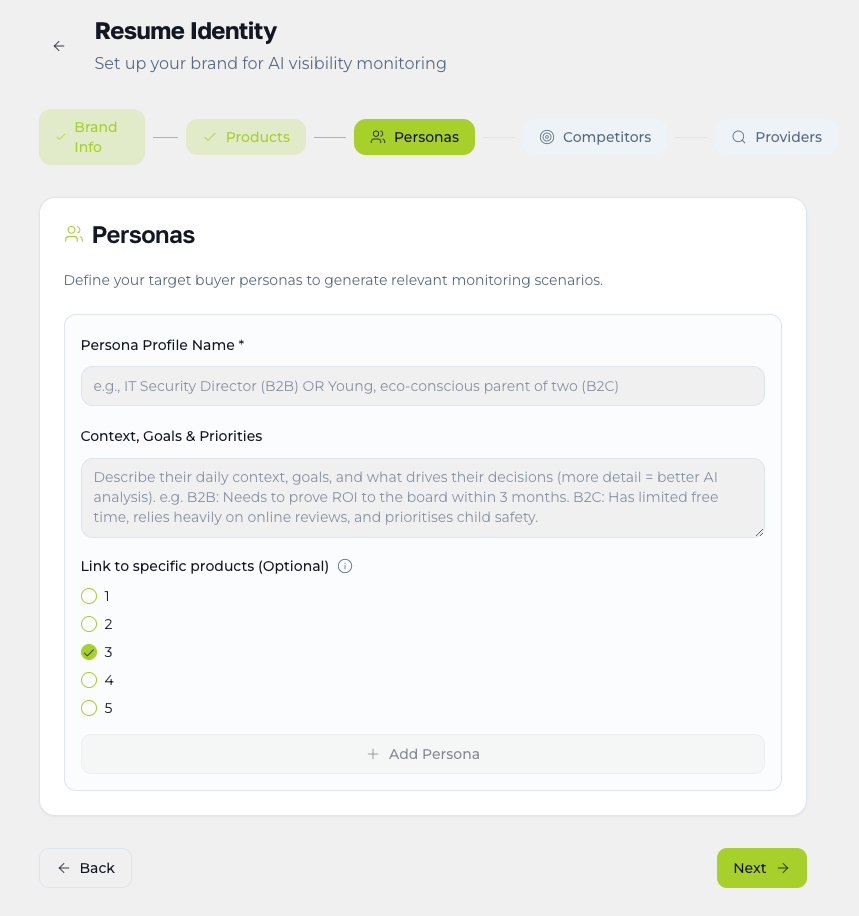
Personaformuläret innehåller fälten Persona Profile Name och Context, Goals & Priorities. Deras namn indikerar tydligt vad vi behöver. En persona kan inte vara ett allmänt segment eller en demografisk stereotyp. En beskrivning som ”kvinna i åldern 30–45 som värdesätter kvalitet och modernitet” berättar inte vilket beslut denna person behöver fatta, vad de letar efter eller vilken del av erbjudandet som är viktig för dem.
En användbar persona beskriver:
professionell roll eller livssituation
ansvar inom beslutet
problem eller mål
utvärderingskriterier
begränsningar
processens stadium
produkter eller tjänster som beslutet rör
Inom B2B kan personanamnet identifiera en specifik roll, till exempel:
arkitekt som designar en anläggning
anläggningschef ansvarig för utrustningens tillförlitlighet
teknisk inköpare som väljer leverantör
projektledare för logistikcenter
chef för fabriksomvandling
start-up-grundare som söker ett pilotprojekt
Inom B2C kan situationen vara viktigare än demografi:
enskild investerare som bygger eller renoverar ett hus
användare av en befintlig grind som behöver en reparation
person som söker en en-till-en-session med en facilitator
deltagare intresserad av ett visst workshopformat
person som arbetar självständigt med digitalt material
Hur en bra personabeskrivning ser ut
För bred
Husägare som värdesätter kvalitet, säkerhet och modern design.
Vi vet inte om denna person bygger ett hus, hanterar ett fel, byter en dörr, köper en operatör eller jämför åtkomstkontrollsystem.
Specifik
En person som beslutar om att köpa en garageport, entrédörr eller automationssystem vid byggnation eller renovering av ett hem. De söker en lösning anpassad till dimensioner, byggnadsstruktur och avsedd användning. De jämför total projektkostnad, installationsmetod, isolering, säkerhet, leveranstid, garanti och tillgänglighet av framtida service. De behöver tydlig information om vad som ingår i mätning, offert, leverans, installation och driftsättning.
Denna beskrivning försöker inte gissa personlighet. Den visar ett verkligt problem, kriterierna och beslutets omfattning.
B2B-exempel
En person ansvarig för tillförlitligheten hos portar, operatörer, tekniska dörrar och lastkajutrustning i en driftsatt anläggning. Deras mål kan vara att lösa ett fel, utföra en inspektion, modernisera utrustning eller hitta en löpande tjänsteleverantör. Prioriteringar inkluderar säkerhet, minskad driftstopp, svarstid, tillgång till reservdelar och dokumentation av utfört arbete.
Även här behöver vi inte ålder eller en livsstilsbeskrivning. Roll och ansvar räcker för att bygga relevanta scenarier.
Koppla varje persona endast till rätt produkter
När du har slutfört erbjudandet låter Semantio dig tilldela produkter som är relevanta för personans beslutssituation. Detta är inte bara kosmetisk formorganisation. Det är en av de viktigaste relationerna i hela identiteten.
Modellen är:
persona → problem och kriterier → produkter eller tjänster relevanta för det beslutet
En persona kan kopplas till flera produkter. En produkt kan röra många personas. Detta betyder dock inte att varje person ska kopplas till allt.
Exemplet med hus och trädgård följer samma princip. Om erbjudandet inkluderar takfönster, PVC-fönster, altandörrar, pergolor och uterum, kan personan ”person med hus och trädgård som planerar en ny trädgårdsdesign” kopplas till pergolor och uterum. Det finns ingen anledning att automatiskt tilldela takfönster bara för att de tillhör samma varumärke.
Produkt-till-persona-relationen skyddar forskningen från att skapa scenarier som formellt är relaterade till varumärket men inkonsekventa med verkligt mänskligt beteende.
persona | produkter värda att tilldela | produkter som inte bör läggas till automatiskt |
|---|---|---|
enskild investerare som bygger eller renoverar ett hus | garageport, ytterdörrar, automation, konsultation och installation | lastkajutrustning, industridörrar, lösningar för industrianläggningar |
anläggningschef eller underhållschef | service, automation, industridörrar, tekniska dörrar, lastkajutrustning | bostadsdörrar bara för att de finns i varumärkesportföljen |
brandsäkerhetsspecialist | branddörrar, konsultation, val, installation och service | garageportar för privatkunder |
kandidat till en certifierad kurs | kurs som förbereder deltagare för yrkesutövning | mentorskap avsett endast för personer som redan är certifierade |
person som arbetar självständigt | gratis verktyg och digitalt material | avancerat professionellt mentorskap |
företag som söker kontorsutrymme och infrastruktur | kontor, coworking, rum, studio eller infrastrukturtjänster | rymdprogram, investeringsstöd eller acceleration utan bekräftat behov |
Skapa inte personas i förväg
Låt oss fastställa en sak: antalet personas är inte ett mått på kvaliteten på den identitet du har förberett.
En ny persona behövs när den representerar ett materiellt annorlunda sätt att fatta ett beslut. Två personer kan vara intresserade av samma produkt men ha olika roller och kriterier. En arkitekt behöver designdata och installationsmått. En teknisk inköpare jämför leveransomfattning, kostnad, tidplan och servicevillkor. En anläggningschef bedömer senare drift, svarstid och risk för driftstopp.
Skillnader i ålder, befattning eller sektor motiverar inte separata personas om problemet, kriterierna och delen av erbjudandet förblir desamma.
Innan du lägger till ytterligare en profil, fråga:
Leder denna persona till en annan uppsättning motiverade frågor, eller ger den bara ett annat namn till samma målgrupp?
En konkurrent är ett alternativ i ett specifikt beslut
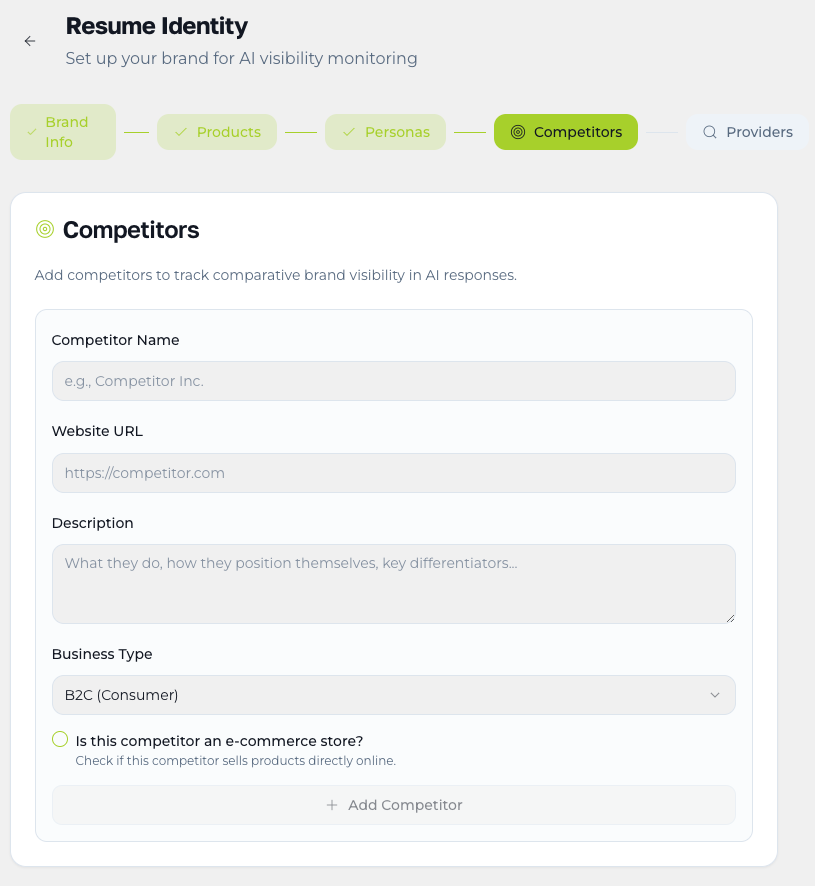
Avsnittet Konkurrenter låter dig lägga till en konkurrents namn, webbplats, beskrivning, företagstyp och e-handelsinformation.
Den viktigaste frågan är inte ”vem verkar i denna sektor?”. Den är:
Vem skulle denna persona genuint överväga istället för det undersökta varumärket i detta specifika beslut?
Ett företag kan vara en konkurrent endast för en del av portföljen.
I exemplet med en leverantör av portar och dörrar kan tre olika typer av alternativ identifieras:
lokalt företag som erbjuder garageportar, entrédörrar, automation och installation för privatkunder
nationell specialist på industridörrar och lastkajsystem
auktoriserad tjänsteleverantör som främst konkurrerar om reparationer, underhåll och modernisering av befintlig utrustning
Det första företaget kan vara ett genuint alternativ för någon som bygger ett hem. Det andra kan vara ett alternativ för en logistikchef. Det tredje kan vara relevant för en anläggningschef eller en användare som behöver en reparation. Ingen av dem behöver konkurrera med hela varumärkets erbjudande.
Samma gäller för ett utbildningsvarumärke. En coachingskola kan vara ett alternativ för någon som överväger en professionell bana, men inte för en deltagare i en viss ceremoni eller en användare av digitalt material. En självstyrd metod kan konkurrera om uppmärksamheten hos människor som söker verktyg för personligt bruk, men den utgör inte nödvändigtvis ett alternativ till en kurs med en viss status.
Hur man beskriver en konkurrent neutralt
Beskrivningsfältet bör inte användas för att skapa en fördel för det undersökta varumärket.
Inte bra
Stor, oflexibel konkurrent som erbjuder dyrare och mindre personliga lösningar.
Detta är positionering, inte en forskningsbeskrivning.
Bättre
Ett företag verksamt på den svenska marknaden som designar, levererar och servar industridörrar och lastkajsystem för tillverkningsanläggningar, lager och logistikcenter. Det är ett alternativ i industriella projekt, men inte inom området ytterdörrar för hem.
Denna beskrivning identifierar kategori, marknad, målgrupper och konkurrensgräns. Den berättar inte för modellen vilket företag som är bättre.
Även om en prompt i formuläret hänvisar till positionering och differentierande faktorer, registrera först och främst observerbara skillnader. Information om att ett företag endast verkar inom B2B, betjänar hela Sverige eller erbjuder en viss kategori kan vara materiell. Ett omdöme om att det är mindre flexibelt, av lägre kvalitet eller mer innovativt bör inte ingå i forskningens neutrala grundvalar utan starka och lämpligt dokumenterade bevis.
Lägg inte automatiskt till:
marknadsplatser
handelsmedia och branschportaler
branschorganisationer
kommersiella partners
tillverkare som levererar komponenter till det undersökta varumärket
företag som bara dyker upp tillsammans med varumärket i sökresultat
enheter med liknande namn som löser ett annat problem
En konkurrent bör ha en motivering, inte bara en likhet.
Kontrollera modellen från båda sidor
När du har lagt till produkter, personas och konkurrenter, kör ett konsekvenstest.
Från produktsidan
har varje viktig produkt kopplats till minst en verklig persona
lades ett objekt utan persona till för att det är materiellt, eller bara för att det visas på webbplatsen
är en produkt faktiskt en tjänst eller en variant av ett annat objekt
Från personasidan
har varje persona ett specifikt problem och relevanta produkter
leder beskrivningen till scenarier som skiljer sig från andra personas
har hela portföljen tilldelats enbart för bekvämlighet
följer kriterierna från rollen eller genuin kunskap om kunder
Från konkurrentsidan
är det tydligt i vilken kategori de konkurrerar
rör konkurrensen den undersökta marknaden
kan du identifiera en persona eller situation där de är ett genuint alternativ
undviker beskrivningen att positionera det undersökta varumärket
Detta är ett enkelt men effektivt test. Om vi inte kan förklara varför ett element finns i identiteten och vad det är kopplat till, behöver det förmodligen korrigeras eller tas bort.
Val av AI-leverantörer slutför konfigurationen
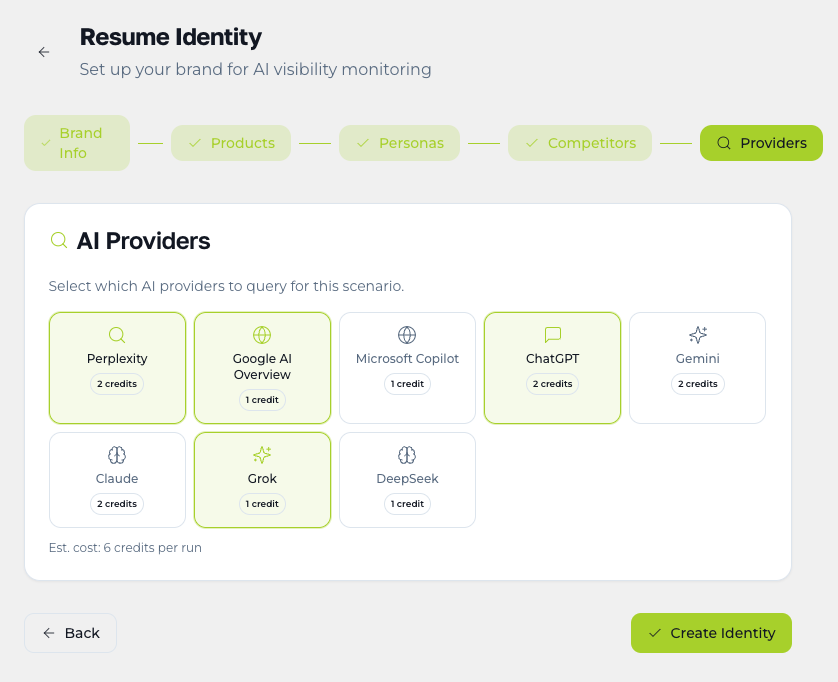
I slutet av identitetskonfigurationen låter Semantio dig välja de system som ingår i övervakningen. I skrivande stund, augusti 2026, kan du välja Perplexity, Google AI Overview, Microsoft Copilot, ChatGPT, Gemini, Claude, Grok och DeepSeek. Varje leverantör visar en kreditkostnad, medan panelen visar den beräknade kostnaden för att köra forskningen.
Detta är ett operativt steg, inte en annan komponent i varumärkesbeskrivningen. Valet av system påverkar dock observationsvillkoren. Svar kan skilja sig mellan modeller, gränssnitt, marknader och mättillfällen. En gedigen AI-synlighetsrevision registrerar därför system, datum, språk, marknad, scenario och komplett svar.
Det är inte heller användbart att reducera resultatet till ett enda nummer. Närvaro, rekommendation, faktisk noggrannhet, citat och stabilitet beskriver olika fenomen, som förklaras i AI-synlighet är inte ett enda mått.
Checklista för en komplett identitet
Innan du klickar på Create Identity, kontrollera hela modellen. Du kan alltid redigera identitetsdata senare.
Omfattning och varumärke
den undersökta entiteten är entydig
marknad, land, språk och affärsmodell är korrekta
alias innehåller inte andra entiteter
varumärkesbeskrivningen är neutral och faktabaserad
varumärket har inte positionerats mot konkurrenter
Erbjudande
alla materiella produkt- och tjänstegrupper har inkluderats
produkter har inte fragmenterats överdrivet
tjänster har inte dolts i produktbeskrivningar
det finns inga dubbletter eller historiska objekt presenterade som aktuella
beskrivningar identifierar funktion, användningsfall och viktiga begränsningar
Personas och relationer
varje persona representerar en specifik beslutssituation
var och en har ett mål, kriterier och begränsningar
endast relevanta produkter har tilldelats personas
ingen persona har kopplats till hela portföljen utan motivering
viktiga produkter har motsvarande beslutskontexter
Konkurrenter
varje konkurrent är ett genuint alternativ
konkurrensområdet har beskrivits
marknad och affärsmodell är korrekta
partners, portaler och tillfälligt liknande företag har inte lagts till som konkurrenter
beskrivningar innehåller varken värdeomdömen eller säljargument
Källor och luckor
materiella fakta stöds av källor eller kunskap från en identifierad person
varumärkespåståenden har separerats från fakta
osäker information har markerats för förtydligande
ingen lucka har fyllts med text bara för att ett tomt fält kändes obekvämt
En bra identitet beskriver inte allt
En identitet är komplett inte när den innehåller allt som kan sägas om ett varumärke, utan när den innehåller allt som behövs för att på ett tillförlitligt sätt genomföra en specificerad studie.
Detta är en viktig skillnad.
En alltför detaljerad profil kan vara lika problematisk som en som är för generell. Den introducerar perifera produkter, tillfälliga personas och konkurrenter som är irrelevanta för de viktigaste besluten. Den ökar antalet möjliga scenarier, men ökar inte nödvändigtvis forskningens värde.
En bra identitet är selektiv. Den behåller de fakta, gränser och relationer som är viktiga. Den utelämnar marknadsföringsfyllnad. Den låter dig se ett varumärke som ett system av relationer mellan erbjudandet, människor och alternativ.
Bygg en modell som verkligen kan testas
Om du redan har en neutral varumärkesbeskrivning, gå vidare till erbjudandet och lägg endast till de produkter och tjänster som representerar distinkta beslutssituationer. Beskriv sedan människor genom deras verkliga beslut och tilldela dem lämpliga delar av portföljen. Slutligen, lägg till konkurrenter som en kund genuint skulle kunna överväga i samma sammanhang.
Då kommer Semantio inte att undersöka ett abstrakt uttalande om varumärkesidentitet. Det kommer att övervaka varumärkets representation i situationer som liknar verkliga mänskliga frågor.
Börja i appen, skapa din första identitet och genomför en slutlig granskning med någon som känner till erbjudandet och kundernas beslutsprocesser. Om resultaten avslöjar tvetydigheter, felaktiga associationer eller saknade relationer, behandla dem som material för vidare arbete med varumärkets semantik, inte som en inbjudan att förbättra resultatet genom genvägar.
Målet är inte att lära forskningen ett föredraget svar. Målet är att skapa förutsättningar där modellens svar kan ses, jämföras och verifieras ärligt.