
Report · 10 November 2026
The Generative Portrait of Poland
The first measurement of how six language models talk about Poland to people and companies from 12 countries
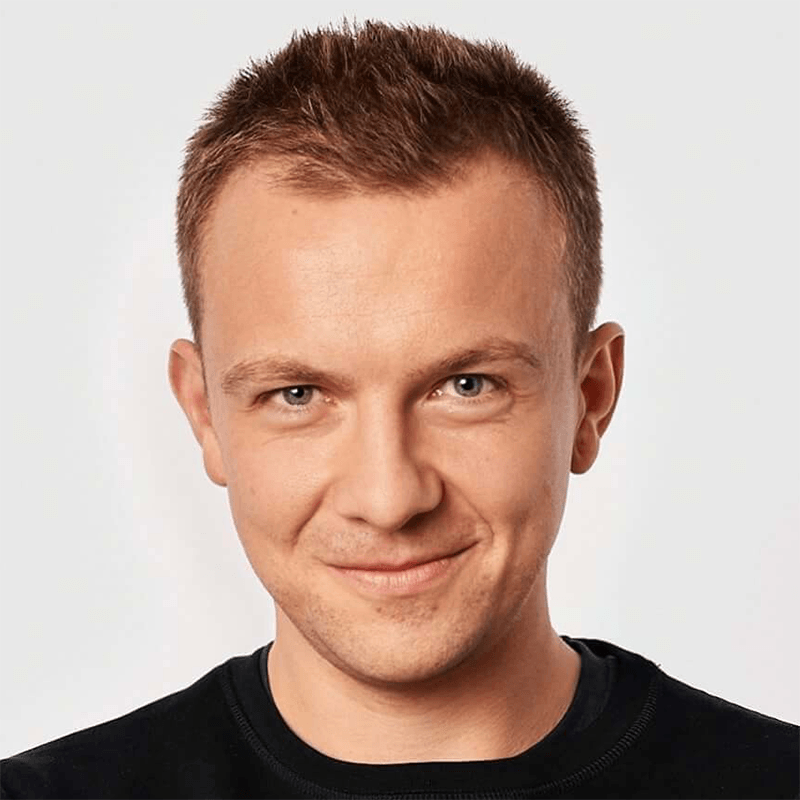
When a question does not name Poland, language models bring it in of their own accord in seven answers out of ten, but in questions about Europe “in general”, in fewer than one in two, and when they do bring it in, they mention it more often than they recommend it. To companies they talk about Poland almost always, even when nobody asks about it: it comes up in 98 answers out of 100. Its role, however, depends on the decision area, and in logistics Poland loses on geography, not on cost. These are the main findings of the report “The Generative Portrait of Poland”, a semantic map of Poland in the answers of six language models.
The semantic map of Poland
The report in a single map: the cities, places, names, industries and institutions that language models associate with Poland. Zoom in and tap a square to see the sentence from the report, the chapter and the PDF page.
Open the mapWorks on your phone too: pinch to zoom.Download the report
“The Generative Portrait of Poland” (Part I “Poland for People”, Part II “Poland for Business”, the page about the tool, the methodological annex)
See also: The semantic map of Poland →
How the report was made
The study covers six generative AI models queried through their official APIs: ChatGPT, Gemini, Claude, Perplexity, Grok and DeepSeek. The main study ran from 25 August to 28 September 2026: the models received 1,400 questions in 11 languages, 700 on behalf of individuals and 700 on behalf of companies from 12 markets: China, Czechia, France, Germany, Italy, Norway, Slovakia, Spain, Sweden, Ukraine, the United Kingdom and the United States. The questions concern everyday decisions: where to go for a weekend, where to study, where to move, where to build a plant, whom to contract production to, how to vet a business partner. That produced 8,400 answers; each was assessed by the same model judge, and the results were checked through the five control layers described in the annex. From 30 September to 2 November 2026, control and additional measurements followed: a shortlist for companies (96 questions that do not name Poland, 576 answers), thematic measurements on the war and a measurement in search mode. The research programme as a whole comprises more than 14,500 answers from language models (LLMs). The report has two parts: “Poland for People” and “Poland for Business”.
For editors
“The Generative Portrait of Poland” is a semantic map of Poland: a record of the places, names, companies, arguments and sources that six language models associate with the country when they answer individuals and companies from 12 countries. Below are the strongest figures from both parts. Each comes with its denominator and the chapter where the rest can be found.
Part I. Poland for People
Poland is in the answer when it is in the question. When a question does not name Poland, the models bring it in of their own accord in 72.4% of 1,452 answers. In questions about the region it comes up in 91.7%, but asked about Europe “in general”, the models name it in fewer than one answer in two (45.1% of 324). (chapters 1–2)
Mentioned more often than recommended. Explicitly recommended in 55.9% of the 1,051 answers in which the model brought Poland in of its own accord; advised against in 1.7%. The less often Poland comes up, the more often it is recommended: 47.0% in questions about the region, 62.3% in questions about Europe in general. (chapter 4)
Chopin in every answer about famous Poles, but in one in eight about a trip to Poland. 144 of 144 against 12.0% of 1,116 practical answers. Polish games (The Witcher, CD Projekt) appear in 86.1% of the 72 answers to “what is Poland famous for today” and in 0 of the 1,116 practical answers. (chapter 6)
How much does it cost to live in Kraków? The answer points to a site nobody in Poland edits. numbeo.com in 225 of 4,200 answers to individuals; Statistics Poland (GUS) in 76. (chapter 9)
A tour seller ahead of the national tourism portal. In sources from search, getyourguide.com has 83 citations and poland.travel 15. Of the URLs the models give themselves, 49.5% lead to Polish sites; of the sources from search, 22.4%. (chapter 5)
Asked about the war, the models do not advise against Poland, but they almost always add a “but”. 0 of 792 answers advise against it as a destination, 15.7% carry no caveat, NATO comes up in 78.1% (a separate measurement from October). (section 4.7)
14 confirmed factual errors (a lower bound, not a rate); the most serious concern rules on which decisions depend: “Poland is not in the Schengen area”, “Poland does not allow dual citizenship”. (chapter 7)
Worth a closer look: chapter 5 (sources: gov.pl is the most-cited domain for each of the six models and in each of the 12 markets, while Wikipedia barely exists as a source, at 0.6% of citations); chapter 6 (the canon on request and the canon in use, or the activation gap); chapter 8 (12 market profiles: what the models tell people from each country about Poland).
Part II. Poland for Business
The models put Poland forward to companies of their own accord in 98 answers out of 100. 98.4% of 576 answers to questions that do not name Poland (shortlist, 30 September); explicitly recommended in 82.5%. (chapter 2)
Poland loses on geography, not on cost. Recommendation: sales market 93.1%, engineers 93.0%, contract manufacturing 69.4%, warehouse for Europe 62.3%. Cost is Poland’s argument in every logistics answer, while the hubs are the Netherlands and Germany (delivery to the west in 2–3 days). (chapters 2, 4, 10)
KGHM appears in every answer about the largest Polish companies, but in 21 of 4,200 answers to companies. The Polish companies that actually do the work in answers for business are registers: Krajowy Rejestr Długów, a Polish debt register, in 143 answers, BIG InfoMonitor in 97. (chapter 5)
Asked for certified Polish subcontractors, the answer names a Polish company in 5 cases out of 30. (chapter 5)
PAIH is in the models’ answers, but search in the market’s language rarely leads to it. In questions about incentives, PAIH, the Polish Investment and Trade Agency, appears in 26 of 27 answers with URLs given by the model and in 3 of 12 with sources from search. (chapter 6)
The models add the Baltic ferry for Swedish companies of their own accord. The ferry comes up in 87 of 348 answers for Swedish companies, although no question asks about it. (chapters 7, 10)
The war does not cost Poland its recommendation. None of 864 answers advises against it as a choice, but only 3.8% recommend it without a “but”, and some suggest Czechia to risk-sensitive boards. As a base for the reconstruction of Ukraine, Poland is recommended in every answer. (chapter 8)
Access to a search engine does not bring Poland into the answer. In a separate measurement from October (233 questions that do not name Poland, three models), the mention rate of Poland was the same or lower with search. (section 6.5)
Worth a closer look: chapter 4 (eight decision areas and Poland’s rivals in each of them); chapter 6 (sources for companies and search mode); chapter 8 (the war: companies hear about the EU and energy, individuals about foreign-ministry warnings).
Two quotes from the models’ answers
“Poland is probably the best choice for a Scandinavian: relatively close, an EU country, safe, full of experiences and considerably cheaper than Sweden, Norway or Denmark.”
Claude, Sweden, question about weekend cities “in a country to the east that gives a lot for the money”; the question does not name Poland. (Part I, chapter 8)
“Poland is a heavily defended NATO ally. It’s essentially one of the most secure places in Europe right now.”
Gemini, United States, question from a person whose parents are worried about them going to Poland; thematic measurement from October. (Part II, chapter 8)
The quotes are single answers, not assessments of the models. The full quotes, with the original language and the answer ID, are in the “Key findings and quotes” documents.
Downloads
For editors, there are two extracts (Part I and Part II), a “Key findings and quotes” document for each part and 12 local notes, one for each market. The report is published in English and in Polish (“Polski Portret Generatywny”).
Report partners
- Knowledge partner
 AI Business Center Foundation · aibusiness.centerThe foundation works with industrial and construction companies on adopting new technologies, efficiency and preparing for regulatory change.
- Under the patronage of
 Business Centre Club · bcc.org.plA business club and employers’ organisation. The report is published under the patronage of BCC.
How to cite
Grzegorz Miłkowski (2026). The Generative Portrait of Poland. Brand Semantics P.S.A. https://semantio.pro/en/reports/generative-portrait-of-poland/
When you quote the findings or use the data, give the author, the title and a link to this page.
What the report does not say
The report measures the models’ answers returned through the API within a dated window (main study 25 August – 28 September 2026; control and additional measurements 30 September – 2 November 2026), not what the consumer app shows, not website traffic and not the effectiveness of any campaign. It does not forecast investment decisions and does not assess the work of any institution. It does not rank markets or models. It does not combine figures from the study with those from the shortlist, because these are two sets with separate denominators. It does not compare individual models’ recommendation rates in the main text, because four of them were subject to a length cap on answers in the study (annex). It is a dated snapshot, a semantic map of Poland in the answers of six models to questions from individuals and companies in 12 markets, and it should be read as such.
Language models in brief
What is a language model (LLM)?
It is a program that learned language from a vast number of texts and uses this to write answers in sentences, the way a person would. ChatGPT, Claude, Gemini and Perplexity run on such models. LLM stands for “large language model”.
How is a language model different from a search engine?
A search engine shows a list of pages and leaves the choosing and reading to the person. A language model puts together a ready answer itself, often with a recommendation. The user gets a conclusion rather than a list of sources, so the model decides what goes into the answer.
Where does a model get what it says?
From the texts it learned from and, more and more often, from a live web search. It does not check facts the way an editorial team does. It repeats what appeared often and consistently in those texts. This is why it can be wrong, and why it is worth measuring what models actually say.
How do language models relate to the AI market?
Artificial intelligence is a broad field. Language models are its most visible part because they talk to people directly. A small number of providers build them, and assistants, answer-giving search engines and tools inside office software are built on their models. One model’s answer therefore reaches many products at once.
How has searching for information online changed?
People increasingly ask full questions, such as “where should I go for a weekend” or “which supplier is best”, instead of typing a few keywords. They get the answer straight away, often without visiting any page. Search engines now also show a model’s answer above the list of results.
What does this change for consumers and companies?
The short list in a model’s answer becomes the starting point for decisions about travel, studies, purchases and investment. A place, brand or country the model does not mention often never gets considered at all. This report measures how Poland comes out in such answers.

About the author and the publisher
The author of the report is Grzegorz Miłkowski, founder and CEO of Brand Semantics, an advisory and technology firm that works on brand semantics and its measurement in language models. Grzegorz Miłkowski is also President of the Management Board of the AI Business Center Foundation, the report’s knowledge partner. The measurement was carried out in Semantio, the company’s own research application, which queries the models through their official APIs and assesses the answers with the same judge within a dated window.
Media contact

COO Brand Semantics
Commissioned research and cooperation

Head of Market Education